

Ethiopia Yaye Natural
Ethiopia Yaye Natural


Couldn't load pickup availability
How Much & How Often
How Much & How Often
Not sure how much coffee you need?
| Cups a week | 250g bag |
| 1-4 | 1 bag a month |
| 5-8 | 2 bags a month |
| 9-12 | 3 bags a month |
| 13-16 | 4 bags a month |
1 cup of coffee = a 240 ml serving based on a 1:16 brew ratio
For example, if your brew ratio is 1 to 16 (often expressed 1:16, or 1/16), then for every one part coffee, you use 16 parts water. In other words, to prepare 1 cup of brewed coffee you would use 15g of ground coffee and 240 ml of water.
Shipping & Delivery
Shipping & Delivery
We ship daily from Monday to Friday from our locations in Vienna. The minimum order value is €20.
Deliveries in Austria
- 2-4 business days
- Free at €35
- €4.50 shipping for orders below €35
Deliveries to Germany
- 2-7 business days
- Free at €70
- €9.90 shipping for orders below €70
Deliveries to countries within the EU, other than Germany
- 3-10 business days
- Free at €70
- €14.90 shipping for orders below €70
Ethically Sourced, Fairly Paid
Ethically Sourced, Fairly Paid
We work closely with coffee farmers and reliable partners to ensure fair wages and transparent relationships.
Behind the Cup
Behind the Cup
We source this coffee through our friends at Cafe Imports who also hold the copyright to all images contained in the following. This coffee originates from the Yaye Washing Station in the region Sidama.
The Sidama region is known for producing the most coffee at the highest grades in Ethiopia, and the geography explains why this is. This region spreads across fertile highlands, where half of the land is cultivated. The surrounding rivers and lakes along with the very high elevation results in cool weather and fertile soil. These factors, in combination with over 100 inches of rainfall per year, cause the coffee to ripen slower than in any other region in Ethiopia. There are over 50 cooperatives and 200 washing stations throughout Sidama. (Sidama is the now correct name for a much smaller region and its people which was once part of the larger region of Sidamo - it's complicated)
The Yaye Washing Station, built in 2021, is dedicated to quality through experimentation. The Odakko project is the culmination of their four years of study and pre-harvest planning between Testi Coffees and Cafe Imports. The aim was to create a traceable, single-variety offering using the most intentionally selected cherry possible at the peak harvest to discover a one-of-one flavor profile. This novel coffee is the product of 50 smallholders from neighboring villages of Yaye and Chericho.
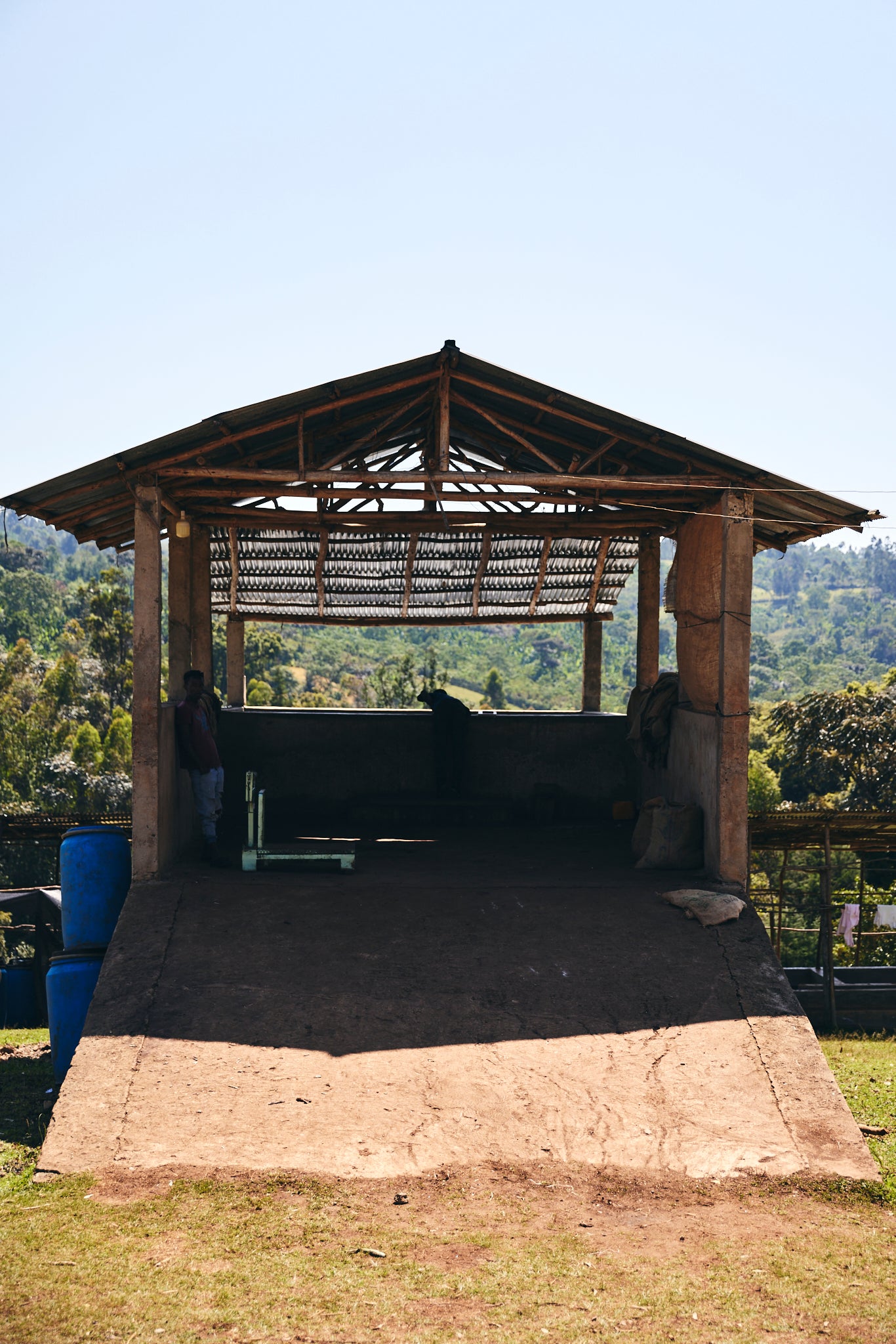
Yaye Washing Station is equipped with immaculate washing facilities, hundreds of raised beds, and numerous fermentation barrels, all ready to process coffee from the hundreds of growers in the surrounding villages. Attention to detail has put Yaye on the specialty coffee map. Along with its focus on quality, Testi Coffee is also committed to serving the coffee-growing communities surrounding their washing stations throughout the country. Testi emphasizes education, building schools, and providing school supplies to the youth. The Odakko Project premium goes toward this social program.
Testi estimates that 40% of green defects are caused by contaminants or exposure to harmful fungi during processing, so cleanliness is prioritized at every step. All Yaye staff wash their hands and all equipment, including floater tanks, picking baskets, drying beds, and shade nets, before coffee passes through. The coffee cherries themselves are washed with potable water, rather than river water. Clean processing creates a clean cup.
The Odakko Project cherry was collected from producers at elevations ranging from 2150 to 2300 MASL within a 10-km radius of the washing station, who were all identified as growing the 74518 variety.
Variety 74158 belongs to a group of selections from the Jimma Agricultural Research Center (JARC). The “74” prefix refers to the year of selection (1974), and “158” is the accession number. This system was used to catalog and identify disease-resistant or agronomically promising accessions collected from the wild or farmers’ fields.
To manage the processing logistics, the coffee was harvested over a four-day period. Each day’s yield was collected between 3:00 and 7:00 PM to prevent uncontrolled fermentation. The cherries were immediately transported to Yaye and immersed in water, where any floaters were removed. The cleaned cherries were then poured onto the drying beds, 300 kilos per bed, and sorted by hand to a strict tolerance of 95% full-ripe and 5% overripe to balance sugar content and complexity.
After sorting, the raised beds were covered with a shade net to slow down the drying process. In fact, the drying beds used are situated in an area of greater wind circulation and less direct sunlight compared to the rest of the station’s drying beds. This extends the drying time to 28 days, carefully reducing the seed’s moisture content to an optimal 12%, maximizing flavor development, transformation, and preservation. Following the 28 days, the dried cherries are removed from the raised beds and rested for six weeks before being delivered in air-tight GrainPro bags to Testi’s mill in Addis Ababa. Every step is deliberate, resulting in cups with notes of jammy red fruit balanced by dark chocolate, red wine acidity, and mild sugary sweetness.
Washing Station: Yaye
Process: Natural Special Prep
Variety: Variety 74158
Elevation: 1.995 - 2.300 MASL
Region: Sidama
Harvest: November – January
Tasting notes: Raspberry, Elderflower, Red Apple, Dark Choc, Caramel, Vanilla, Mint